The kettle has just boiled, the afternoon has gone flat and the biscuit tin is within reach. The healthy sweet snacks worth keeping in the house are the ones that already feel like a treat: a pear with yoghurt, a warm baked apple, a few almonds with a square or two of dark chocolate. None of it needs a rulebook. It needs a clear idea of where the sugar sits, and one or two things waiting in the fridge.
Is the sugar in fruit the same as the sugar in a biscuit?
Not in the way the NHS counts it. Free sugars are any sugars added to food or drink, plus the sugars in honey, syrups such as maple and agave, nectars, and unsweetened fruit juice, vegetable juice and smoothies. Sugar found naturally in whole fruit, vegetables and milk is a different matter: it does not count as free sugars, and there is no call to cut down on it. For adults the advice is no more than 30g of free sugars a day, roughly seven sugar cubes, and no more than 150ml (a small glass) of juice and smoothies combined. The full detail sits in the NHS guidance on sugar in our diet. Day to day, that makes a pear or a pot of plain yoghurt easy: nothing to read, nothing to count. Flavoured yoghurts, cereal bars and some jars of nut butter deserve a glance at the ingredients list, because syrup and honey count as free sugars however natural they sound.
Healthy sweet snacks you can put together in two minutes
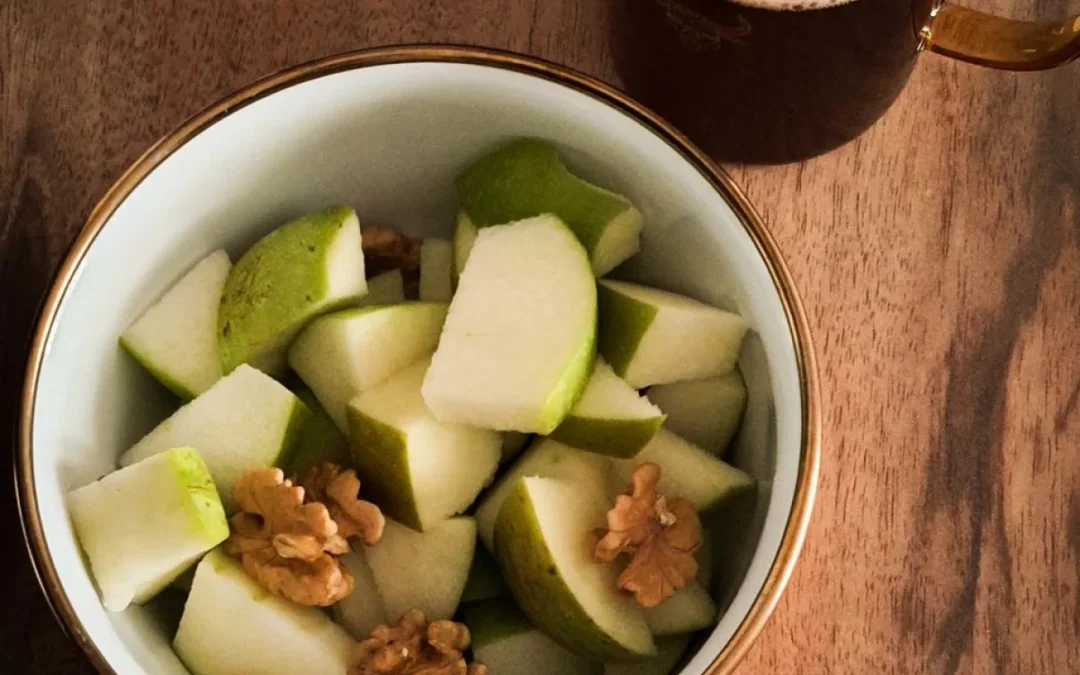
Start with fruit and add something that makes it last. Slice a pear over plain Greek-style yoghurt, then add a pinch of cinnamon and a few chopped walnuts. Stir a handful of frozen raspberries into a pot of yoghurt and leave it for ten minutes, until the berries slump into a sharp little sauce. Clementines are easy: peel two and eat them with a small handful of almonds. Apple wedges take a tablespoon of peanut or almond butter, the kind whose label lists only nuts and perhaps salt. Grapes go well with dark chocolate; at 70 per cent cocoa or more, two squares broken over them feel like a dessert. On a cold day, core an apple, fill the hole with cinnamon and a few raisins and microwave it for three to four minutes, until soft. A spoonful of yoghurt on top finishes it.
How much is enough when the snack is sweet?
Portion sense is mostly about the container. A snack eaten from a bowl at the table has an end; a bag of nuts at the desk does not. Tip out what you want, which for nuts or dried fruit is about a cupped handful, and put the packet back in the cupboard. A handful scales with the hand holding it, so treat it as a rough guide rather than a measurement. A single pot of yoghurt, a banana or two clementines each make a complete snack, and eating a little more than you planned is not a failure. What matters is that the snack feels finished. If it does not, drink a glass of water, wait ten minutes and then decide whether you want a second, smaller helping. Appetite shifts from day to day, after a long walk or a short night, so a fixed amount for every afternoon would be false precision. Notice how you feel half an hour later and adjust next time.
What to eat when the mid-afternoon slump arrives
Whatever has caused the dip, a snack is a good reason to stand up. Take it away from the keyboard, make a drink and give yourself ten minutes by a window, or outside if the light allows. Fruit alone is quick, but fruit with yoghurt, a few nuts or a spoon of nut butter tends to feel more substantial, which is why the pairings above beat a lone banana. With a fridge at work, a pot of yoghurt and a tub of berries are easy to leave there until three, and a spoon kept in the desk drawer saves borrowing one. Without one, clementines and almonds travel in a bag all day. A biscuit with tea is still fine now and then; nothing here needs to replace it. If you feel flat most afternoons for weeks on end, mention it to a GP rather than trying to fix it with another snack.
Sweet snacks to make ahead and keep in the fridge or freezer
The easiest time to make a snack is while the oven or hob is already on for dinner. Simmer two chopped apples or pears with a splash of water and a pinch of cinnamon for about ten minutes, until soft. Keep it in a covered pot in the fridge and use it within two days. Yoghurt bark needs no cooking: spread plain yoghurt about a centimetre thick on a lined tray, press in berries and chopped nuts, freeze until firm and break it into shards. Overnight oats need nothing but a jar. Put three tablespoons of oats in a jar with a spoonful of yoghurt and some grated apple, add enough milk to cover and leave it in the fridge. Choose by the afternoon ahead: stewed fruit for a cold day at home, bark from the freezer for the weekend, oats for days when there is a fridge at work. The biscuit tin can stay where it is. It just stops being the only thing within reach.